If you want to understand the state of the NFL in under 90 minutes, “The Athletic Football Show” has you covered. Specifically via their Lessons Learned episode, an annual recounting of what the final four teams teach us about winning in the modern NFL. I never miss it.
This year? Defense doesn’t win championships. Explosive plays do. It’s the first takeaway of a nugget-filled episode that’s now live on all platforms. I wanted to dive into it with you.
Inside: How big plays explain the successes of Seattle and New England, how broadcasters are prepping for Super Bowl 60 and more coaching news.
This article is from Scoop City, The Athletic’s NFL newsletter. Sign up here to receive it directly in your inbox.
Why explosive plays matter
What’s an explosive? Unfortunately, football media can’t agree on that question. There’s no official definition for what exactly qualifies as a chunk play, but TruMedia defines it as as a run of 12-plus yards or a pass of 16-plus. We’ll stick with that.
The importance of explosive plays isn’t new, of course. They have been a focus of Kyle Shanahan’s run game for years. They were how Sean McVay took the league by storm. And every coach before them also sought to move the ball in bursts. The modern counterbalance came via a defense focused on stopping these plays, the Vic Fangio scheme that has permeated the league.
Still, these big plays are as important as ever. While turnovers and field position still matter, big gains are increasingly realized as the key differentiator, both in college football and in the NFL.
A 2022 data study by PFF found that having one explosive play tripled the expected points value of a drive. Unlike when a team needs three downs at a time to methodically move downfield, a chunk play reduces the number of times an offense has to avoid a mistake.
And thanks to 2024’s NFL kickoff rule changes, a single explosive puts an offense even closer to field goal range than it did at the time of that study.
The most effective way to measure this is explosive-play margin, the difference between the number of chunk plays each offense gains per game and the number its defense allows. It’s no coincidence that the final four teams led the league in that stat’s regular-season margin:
Explosives are just the first of many lessons the trio of Robert Mays, ESPN’s Bill Barnwell and Yahoo’s Nate Nice unpack in this episode. It’s one of the most can’t-miss podcasts of each season, and now live on Amazon, Apple, YouTube, Spotify, and other platforms.
Over to Ted Nguyen, who expands on how the Seahawks win the explosive battle.
📓 What Ted’s Seeing: How Seattle does it
In early November, I noticed that the 2025 Seahawks’ 21 percent explosive-pass rate was then the highest since the 2001 Rams, otherwise known as the Greatest Show On Turf.
- Led by Kurt Warner, Marshall Faulk, Isaac Bruce and Torry Holt, that Rams offense was a pass-heavy attack. Defenses didn’t have enough horses to cover all of the talented pass catchers.
- But outside of Jaxon Smith-Njigba, the Seahawks don’t have another elite pass catcher. So how was OC Klint Kubiak doing this?
Seattle was putting heavy bodies on the field, and defenses matched with base personnel (four defensive backs) to stop the run. The Seahawks would then take advantage of mismatches, leading to opportunities for their tight ends and one-on-one coverage on Smith-Njigba.
Opponents adjusted in the latter half of the season, but Seattle still finished with a 16.9 percent explosive-pass rate (third-best this season).
As for Seattle’s defense, Mike Macdonald isn’t doing anything particularly unique schematically (which I explained in this deep dive in 2024), using a variation of the Fangio scheme.
A core tenet of Macdonald’s system is being able to defend the run from light boxes and sub personnel (five or more defensive backs). To do that, the nickel has to be a third linebacker at times. That’s where 6-3, 220-pound rookie Nick Emmanwori is key.
As I explained in this story, Seattle uses nickel personnel often. In this play from Week 18 against the 49ers, Emmanwori lined up as an off-ball linebacker as the 49ers were in 21 personnel (two backs, one tight end and two receivers).
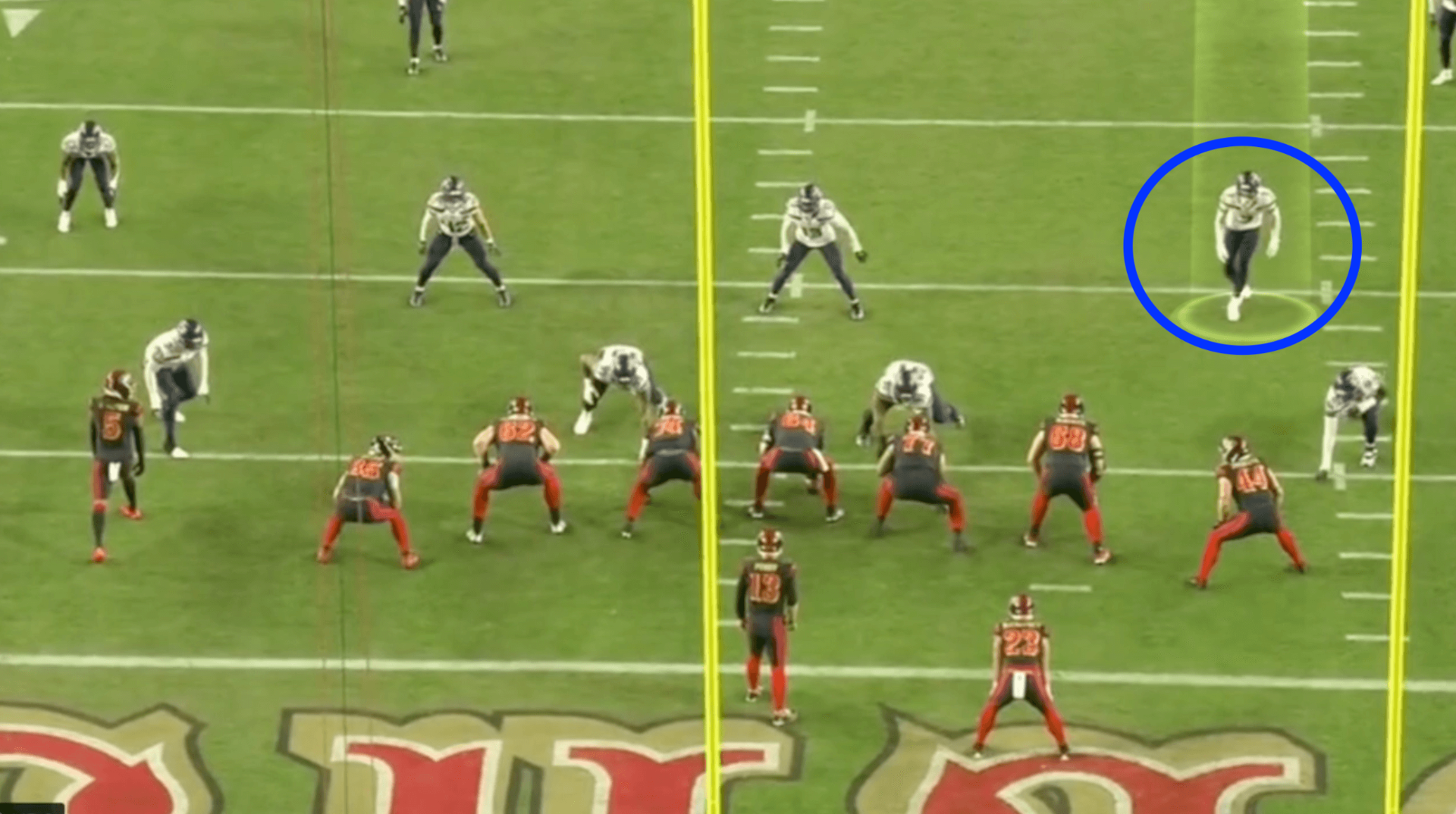
When the 49ers tried to punish what is typically a smaller defense by running the ball, Emmanwori shed the block and stopped Christian McCaffrey for a short gain. Here’s a similar example via @new_era72 on X:
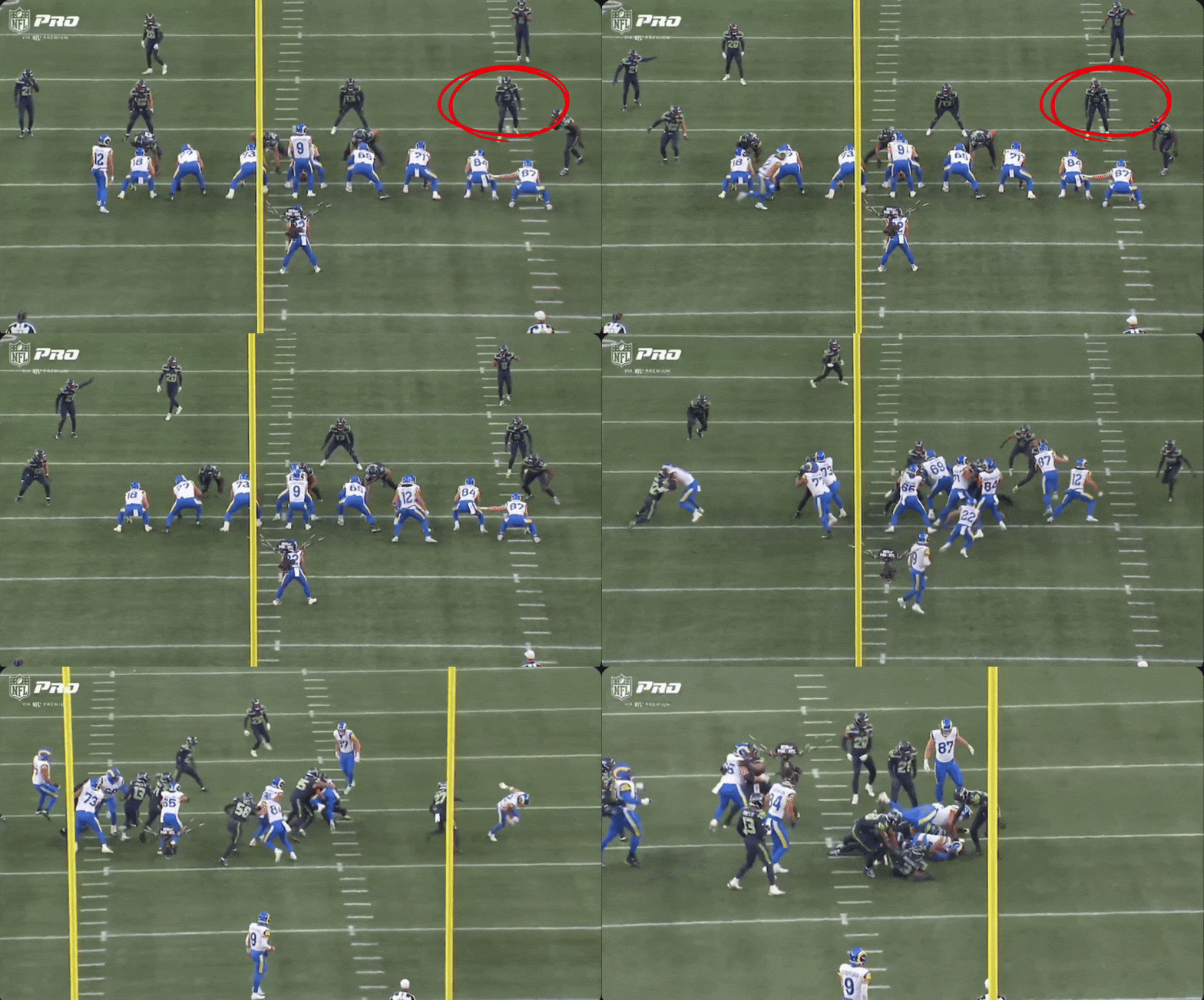
Having the physicality to take on blocks from tight ends and fullbacks is a rare trait for a defensive back, but it is valuable against modern, physical offenses that have been trending toward heavy personnel.
Back to you, Jacob.
Inside the broadcast booth
This Super Bowl is expected to fetch over 100 million viewers, earning a spot among the most-watched telecasts in history.
If so, that’ll make it 16 consecutive years that the Super Bowl was seen by an audience of over 100 million, a big reason why broadcasters like NBC, Fox, CBS, Amazon and ESPN agreed to over $111 billion in fees on the NFL’s current TV rights deal.
This time, NBC’s tasked Cris Collinsworth and Mike Tirico with guiding us all — mom, dad, son, daughter, grandparents and cousin Vinny — through the game.
“It’s people who have consumed all the content for two weeks and people who are waiting for Bad Bunny,” Tirico said to my colleague Matt Barrows, who investigated how the duo prepares. “So you’re merging eight lanes of traffic onto this narrow balance beam. It’s a little bit of everything.”
Collinsworth and Tirico sit in the equivalent of a combat helicopter cockpit, as Matt put it, and are aided by nine devices, each displaying different scores, stats and replay angles. Those devices contain the results of countless hours of research. Background information comes from studying game film, attending practices, meeting with coaches and players and more.
“If he sat and read (the prepared database of information) on the air, it would probably take 10 hours,” said Collinsworth’s right-hand man in the booth, Andy Freeland.
This exhaustive prep proved crucial the last time the Seahawks met the Patriots in the Super Bowl. (Surprise 2015 breakout Chris Matthews, anyone?) Matt’s story is well worth your time.
Extra Points
👔 Plenty of coordinator updates: The Steelers hired former Raider Patrick Graham as DC, the Eagles named 33-year-old Sean Mannion their next OC, the Titans hired former Giants HC Brian Daboll as OC and the Chargers brought Chris O’Leary back to be DC. Busy.
🎙 We heard from Ravens HC Jesse Minter yesterday: “When this job opened, this became the one for me.” Can’t blame him. Full takeaways here.
🔬 Two things in Buffalo: Coach Joe Brady’s introductory news conference reminded us that this is Josh Allen’s team, and it turns out Allen was battling a broken bone in his foot throughout the playoffs. He arrived on crutches.
▶️ Yesterday’s most-clicked: A Hall of Fame voter explains not voting for Bill Belichick. Also popular and still timely: Our two-round mock draft.
📫 Enjoyed this read? Sign up here to receive The Athletic’s free NFL newsletter in your inbox.