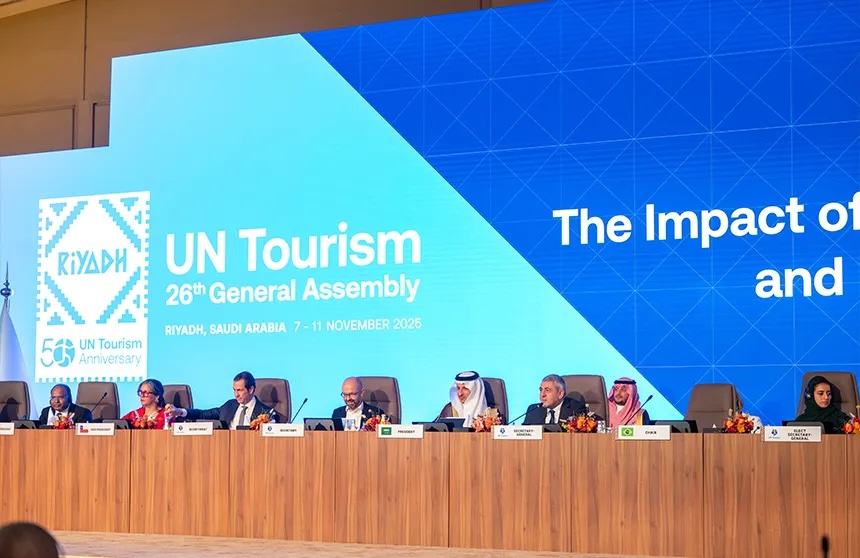
Riyadh has concluded the 26th UN Tourism General Assembly — the largest and most transformative gathering in the organization’s 50-year history — setting a bold global agenda for the future of tourism powered by artificial intelligence, innovation, and sustainability.
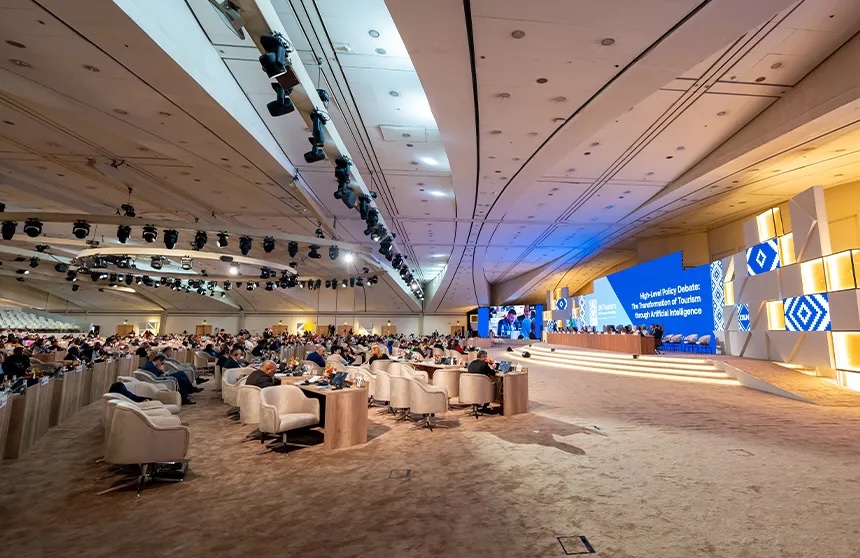
The assembly, held from 7–11 November 2025, brought together delegates from 148 Member States, including 90 Ministers of Tourism and 70 Ambassadors. Hosted at the Mandarin Oriental Al Faisaliah Hotel, it marked the first time the event was staged in the Gulf region and reaffirmed Saudi Arabia’s leadership in shaping the global tourism dialogue.
AI and Innovation Take Center Stage
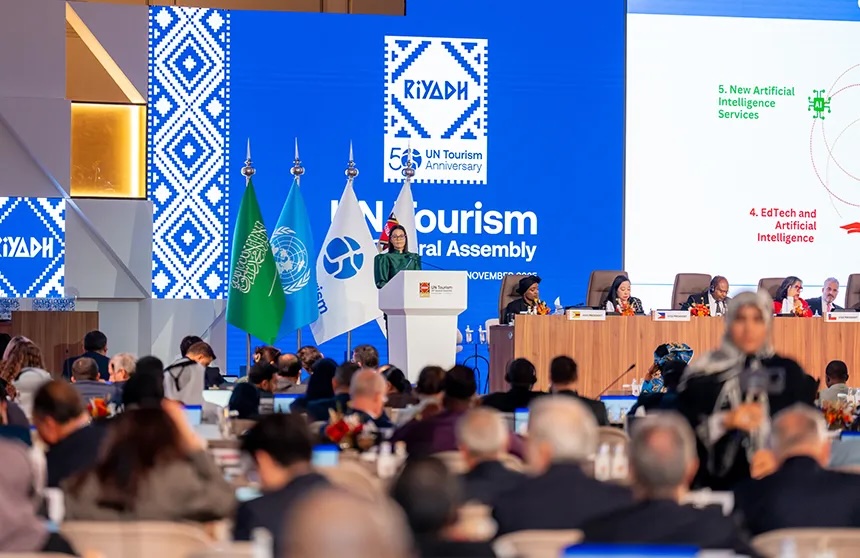
A landmark thematic session on Artificial Intelligence brought together leading figures from government, technology, and tourism to explore how AI can transform visitor experiences, destination management, and workforce development. Key contributors included representatives from Microsoft, Trip.com, Amadeus, and the World Economic Forum, alongside ministers and officials from around the world.
UN Tourism Executive Director Natalia Bayona presented the organization’s roadmap for integrating AI across the tourism value chain, highlighting its potential to improve efficiency, inclusivity, and sustainability. The session concluded with the UN Tourism Artificial Intelligence Challenge, where Smart Tour from Brazil was named the overall winner for its innovative approach to AI-driven visitor engagement.
The assembly culminated in the Riyadh Declaration on the Future of Tourism — a global roadmap outlining commitments to strengthen digital cooperation, encourage investment in AI infrastructure, and empower local communities through technology. The declaration also emphasized policies to promote sustainable innovation and training for tourism professionals worldwide.
Historic Milestones and Leadership
The assembly marked a historic milestone with the confirmation of Shaikha Nasser Al Nowais from the United Arab Emirates as the next Secretary-General of UN Tourism. Upon assuming office in January 2026, she will become the first woman to lead the organization in its 50-year history, ushering in a new era centered on innovation, equality, and collaboration.
Member States also approved the establishment of a new UN Tourism Regional Office in Shanghai, strengthening the organization’s global footprint. In addition, the institutionalization of the UN Tourism Africa & Americas Summit as a permanent biennial event was confirmed, aimed at deepening cooperation between the two regions.
Saudi Arabia’s Leadership and Global Vision
Under the guidance of His Excellency Ahmed Al Khateeb, Minister of Tourism, Saudi Arabia continues to position itself as a global leader in shaping the future of tourism. The Kingdom’s Vision 2030 has accelerated the transformation of its tourism sector, achieving record-breaking visitor numbers of over 116 million in 2024 — seven years ahead of target.
Minister Al Khateeb reaffirmed the Kingdom’s commitment to advancing innovation and sustainability, emphasizing that Saudi Arabia will continue to lead efforts that harness technology to create a more inclusive, resilient, and dynamic global tourism ecosystem.
Looking Ahead: A Roadmap for the Next 50 Years
UN Tourism Member States agreed that World Tourism Day 2026 will be celebrated under the theme “Digital Agenda and Artificial Intelligence,” hosted by El Salvador. The 2027 edition will focus on “Transforming Tourism through Education,” hosted by Cabo Verde. The Dominican Republic will welcome the next General Assembly in 2027, continuing the legacy of progress and cooperation established in Riyadh.
Conclusion
As UN Tourism celebrates its 50th anniversary, the Riyadh Assembly stands as a defining moment — one that not only honored the sector’s global achievements but also set the course for its digital future. With innovation, sustainability, and inclusion at its core, Riyadh’s General Assembly has charted a new path for tourism in the age of artificial intelligence.
By Sid Thaker