February is turning out to be a positive month for foreign portfolio investments (FPIs) in Indian equities as the country saw ₹18,771 crore worth of inflows until 12 February. This follows a sombre period of consistent outflows, with FPIs pulling out ₹62,000 crore in the previous three months.
This signals a shift in sentiment, especially amid a wave of economic optimism over an India-US trade deal in the works. In 2025, India saw net inflows in four months—April, May, June, and October. The year was marked by massive outflows of nearly ₹1.6 trillion, driven by weak currency performance, tariff uncertainty and valuation concerns.
Crude reroute
As part of the India-US trade deal framework, the US has claimed New Delhi has committed to halting oil imports from Russia. India has yet to give clarity on the issue though foreign secretary Vikram Misri said on Monday that India aims to maintain multiple sources of crude supply to ensure stability.
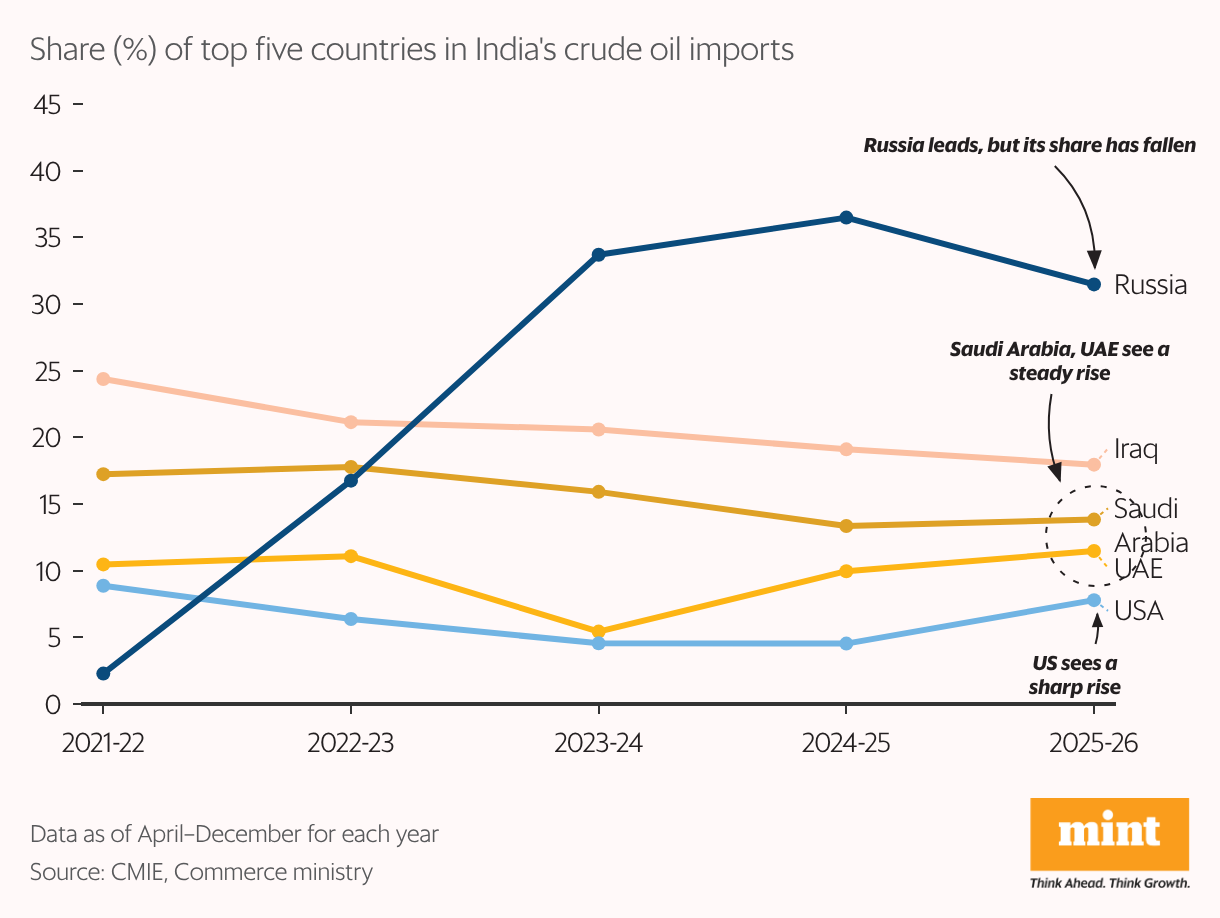
Since the Russia-Ukraine war, as crude oil from Moscow came with heavy discounts, India increased its purchases from 2% of total imports in FY22 to 35% in FY25. While Russian oil, despite recent moderation, still accounts for nearly 30% of total imports, a shift may already be underway.
The US’s share has nearly doubled to 7.8% in April–December FY26 from the same period last year, while Saudi Arabia and the UAE have seen steady gains. With the US intervention in Venezuela, it can also become a reliable source for oil imports in future.
Funding gap
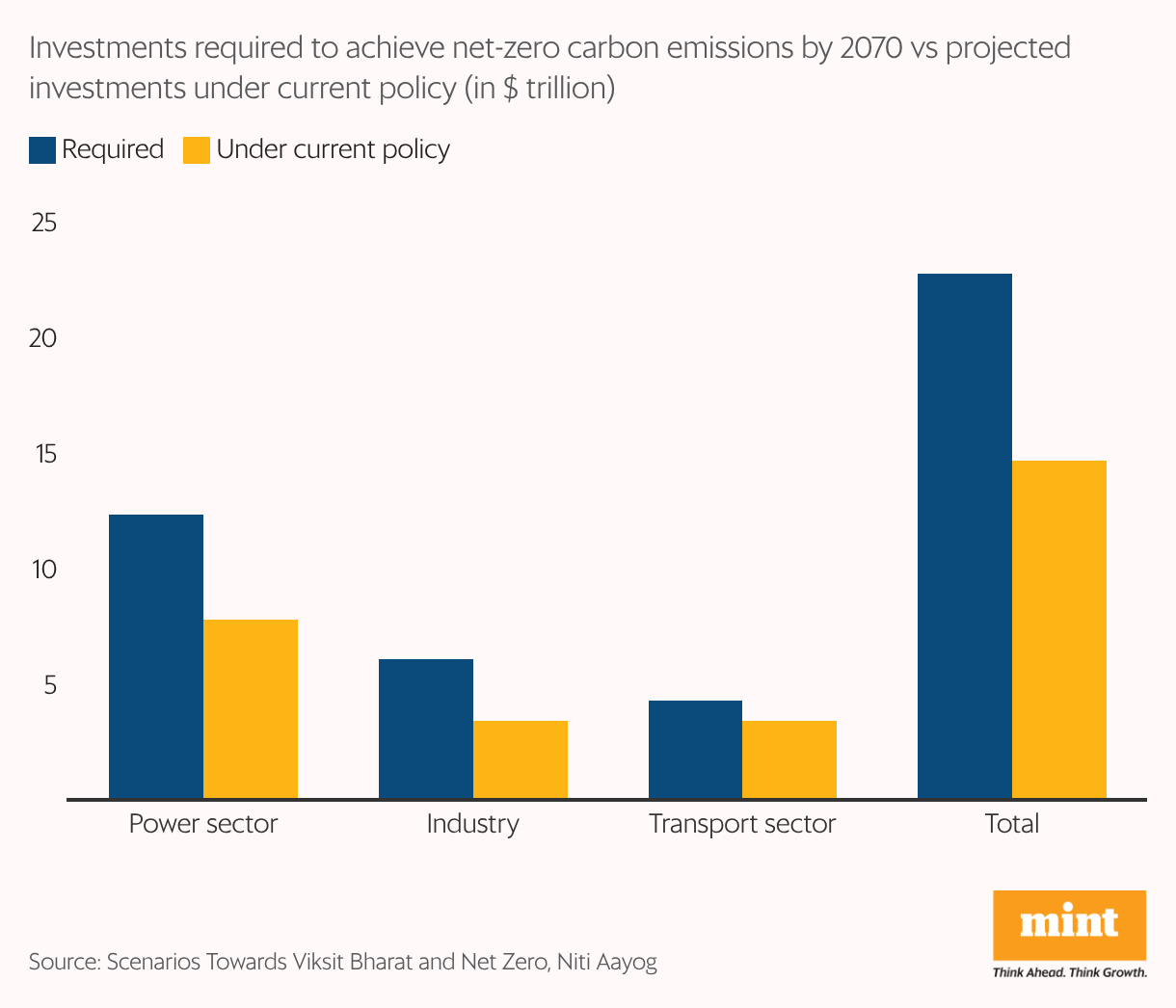
India will need investments totalling $22.7 trillion to reduce greenhouse gas emissions and achieve the net-zero carbon emissions target by 2070, a Niti Aayog study said on Monday. This is nearly twice the estimated cumulative investment of $14.7 trillion that India can achieve under the current policy scenario. The power sector accounts for more than half of total investment needs, driven by rising electrification demand and the transition to low-carbon energy sources.
The study further estimates that of the total funding required, $8 trillion must be deployed by 2050, including nearly $5 trillion in the power sector, reflecting the high initial capital demands of low-carbon technologies. At COP26 in Glasgow in 2021, India pledged to reach net-zero emissions by 2070, covering major sectors including power, industry, transport, buildings and urban development.
Numbers Talk
358: Number of weighted items in the revised Consumer Price Index (CPI) basket, up from 299. The statistics ministry on Thursday rolled out a revised CPI series with 2024 as the base year, formally incorporating online prices to capture a digital, service-led economy.
6.9%: The projected GDP growth rate for India in FY27 by Goldman Sachs Research. This is an upgrade from an earlier projection of 6.7%, buoyed by lower tariffs on exports under the framework of an interim trade agreement with the US.
₹9.13 trillion: The size of Uttar Pradesh’s Budget presented by finance minister Suresh Khanna for FY27 on Wednesday, marking a 12.2% increase from the previous year’s outlay. The budget gave an impetus to infrastructure, technology, employment, and farmers’ welfare.
₹13,203 crore: The value of investments committed by 55 firms in the third round of the government’s production-linked incentive (PLI) scheme for speciality steel, aiming to add 8.7 million tonnes (mt) capacity of the upgraded alloy steel.
450 million: The number of page-views garnered by Jmail, a web tool mimicking Gmail that lets users browse millions of recently-released documents related to the Epstein case, Jmail co-creator Riley Walz shared on his X handle on Tuesday.
Lopsided decline
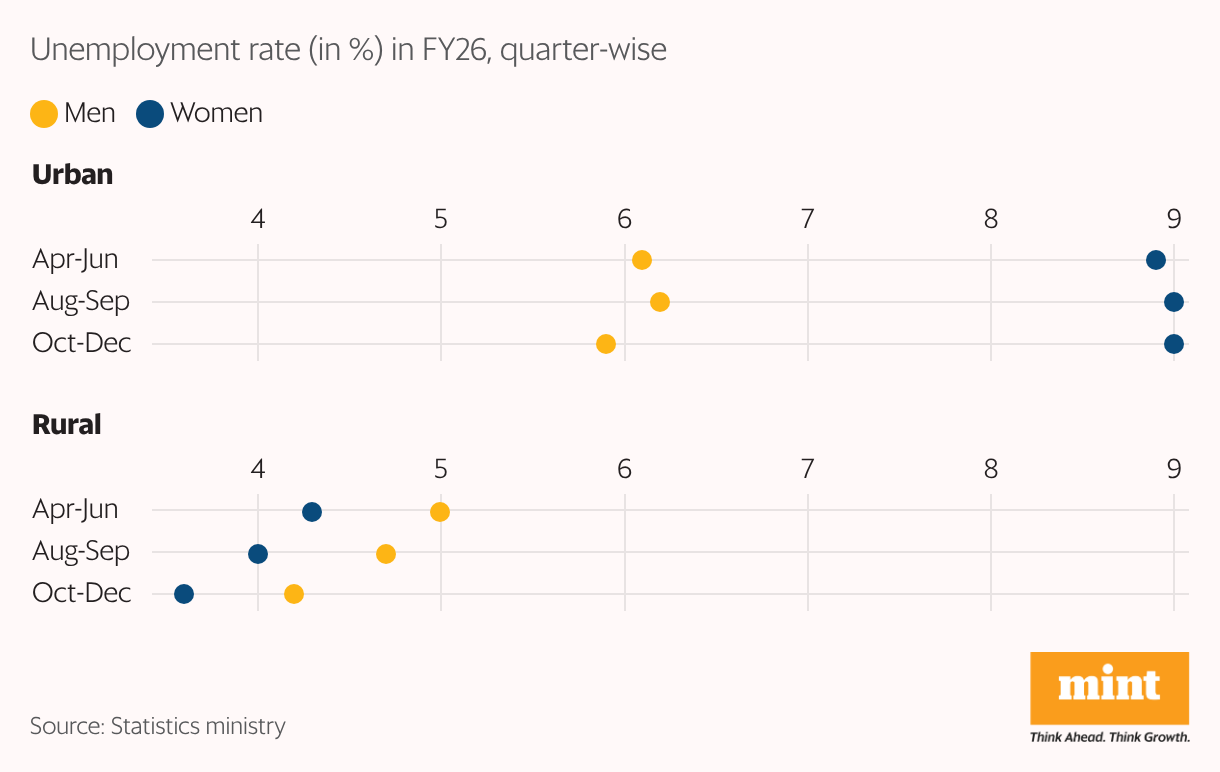
Urban unemployment fell to 6.7% in the October–December quarter of FY26 from July–September’s 6.9%, as per the Periodic Labour Force Survey’s quarterly data released on Wednesday.
The pattern was followed in rural areas as well, where the jobless rate eased to 4.0% from the previous quarter’s 4.4%. While in rural areas, rates for both men and women declined for a third straight quarter, urban areas had mixed results, with the unemployment rate among women staying elevated at 9% in Q3, the same as the previous quarter and marginally higher than 8.9% recorded in April-June.
Quarterly unemployment data, which was limited to just urban areas earlier, has been expanded to cover rural areas as well since the beginning of FY26.
Beyond hubs
The budget’s announcement of a 21-year tax exemption for overseas cloud service providers has generated positive sentiment within the tech industry, with expectations of increased data centre investments and job creation. IT minister Ashwini Vaishnaw expects investments in data centres to cross $200 billion over the years.
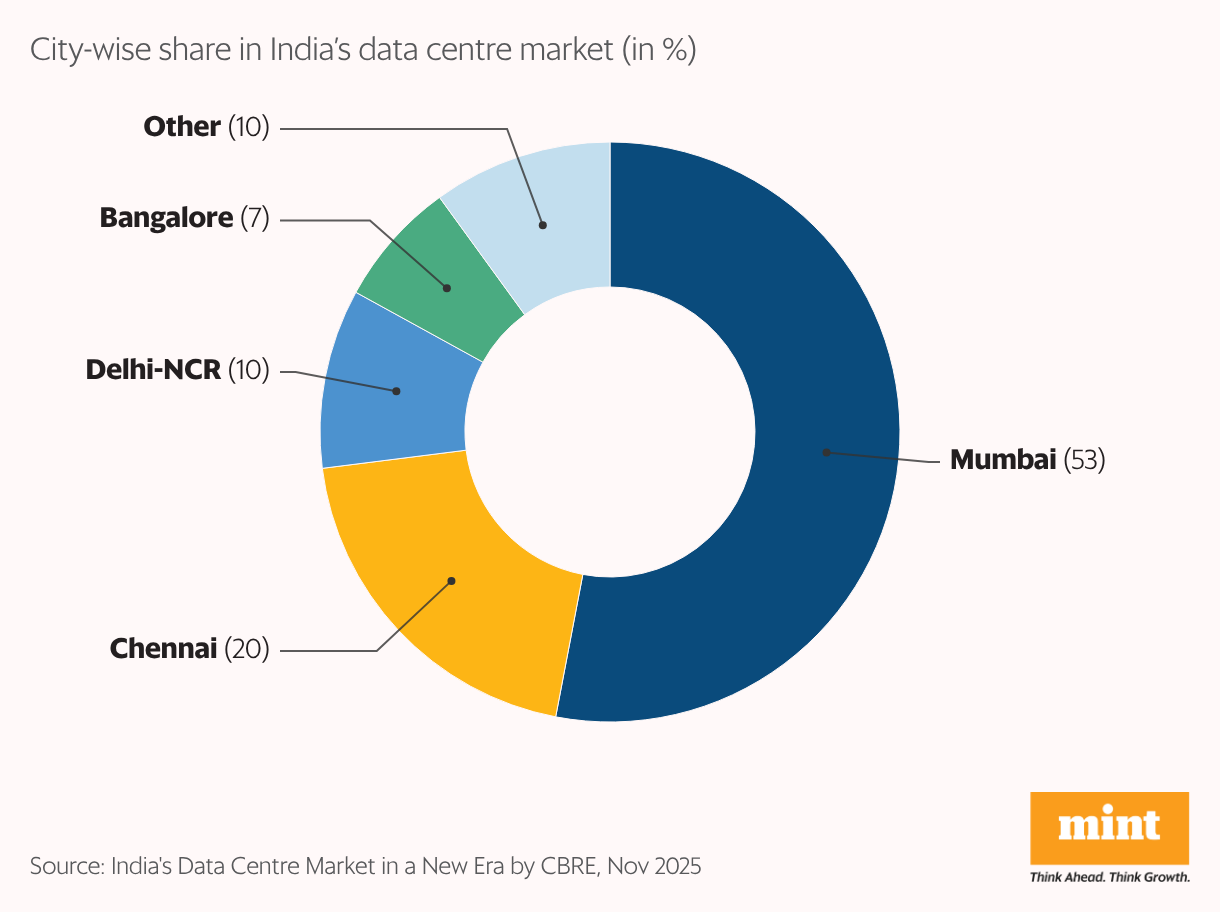
This may open new opportunities in tier-II cities as AI facilities require larger sites, stronger substations and expanded cooling, which several tier-II regions can offer, Mint reported. India’s data centre capacity is concentrated in a few cities.
Mumbai holds 53% of the market and Chennai 20%, with Delhi, Bengaluru, Pune, Hyderabad and Kolkata accounting for the rest, according to CBRE. They lead due to reliable power, fibre networks, subsea cable links and industrial land availability. As the demand for data centres will grow, several tier-II can offer the needed infrastructure such as larger sites and stronger substations.